Source three phase rotary servo motor encoder for Automation, Robotics, and CNC
Find 30 listings for the three phase rotary servo motor encoder to compare specifications like shaft size, output type, and protection grade. Buyers can evaluate options from manufacturers in China with varying lead times and customization availability.
Key considerations
Products List




Comprehensive Sourcing Guide
Three Phase Rotary Servo Motor Encoder Sourcing Guide
Selecting the correct encoder for a three-phase rotary servo motor system requires a precise understanding of signal integrity, mechanical fit, and environmental resilience. These components serve as the critical feedback loop between the motor and the drive, translating rotational position and speed into electrical signals that enable high-precision motion control. Procurement teams must navigate a complex landscape of absolute versus incremental technologies, varying shaft configurations, and diverse output protocols to ensure seamless integration with existing servo drives. The decision matrix is further complicated by regional manufacturing hubs and varying compliance standards, making a disciplined verification process essential for operational reliability.
This guide provides a structured approach to evaluating encoder listings based on observed market data and technical realities. By focusing on verifiable attributes such as mounting types, protection grades, and signal outputs, buyers can filter out noise and identify suppliers who offer genuine engineering value. The following sections detail the specific technical parameters, commercial considerations, and quality assurance steps necessary to secure a supply chain that supports long-term production stability without introducing unnecessary risk or compatibility issues.
Product Scope and Observed Listing Signals
The current market for rotary encoders displays a wide spectrum of product types, ranging from basic incremental models to high-resolution absolute encoders designed for complex servo applications. Listings frequently highlight specific series such as the Absolute Rotary Encoder and Incremental Rotary Encoders, indicating a bifurcation in the market between applications requiring position retention after power loss and those relying on relative speed tracking. Buyers should observe that product descriptions often include generic terms like "Encoder" or "Elevator Encoder," which may obscure the specific technological capabilities of the unit. It is crucial to distinguish between these categories early in the sourcing process, as the working principle—whether absolute or incremental—dictates the entire system architecture and data handling requirements.
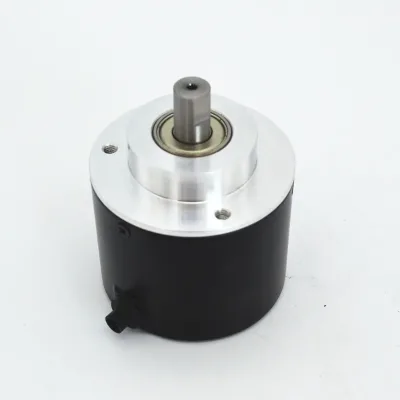
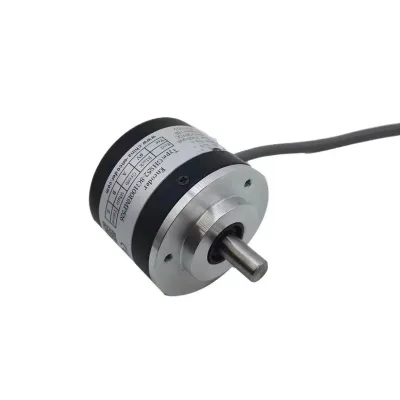
Observed listing signals reveal significant variation in physical specifications and operational parameters. For instance, shaft sizes are commonly listed in millimeters, with observations of 6mm, 8mm, and 9mm options, alongside specialized configurations like inner cone 12mm or hollow shaft designs. These mechanical dimensions are non-negotiable for physical integration, as a mismatch will prevent installation regardless of electrical compatibility. Furthermore, protection grades vary notably, with some units rated at IP00, offering minimal environmental protection, while others achieve IP65, suitable for harsher industrial environments. Procurement specialists must cross-reference these physical attributes against the motor’s mechanical interface to avoid costly returns or custom machining expenses.
Technical Specifications to Verify
Signal output type is a primary technical constraint that must align with the servo drive’s input capabilities. Commonly observed output modes include Complementary Push-pull Output, Long Drive Output, and Line Driver/Push-Pull/Voltage/Open Circuit configurations. Each of these protocols has distinct electrical characteristics regarding voltage levels, current drive capacity, and noise immunity. For example, line driver outputs are generally preferred for long cable runs due to their superior noise rejection, whereas push-pull outputs may be sufficient for shorter distances within a control cabinet. Verifying the exact output mode is essential to prevent signal degradation, which can lead to erratic motor behavior or position errors in high-speed applications.
Operating conditions and resolution metrics define the encoder’s performance envelope under stress. Buyers should verify the operating temperature range, with observed specifications spanning from -10°C to +85°C or -30°C to +85°C, depending on the component’s thermal design. Additionally, maximum rotation speeds, such as 5000 RPM, and response frequencies, ranging from 01 kHz to 100300 kHz, must be evaluated against the motor’s peak operational demands. Resolution, indicated by line counts such as 8192 pulses per revolution, directly impacts positioning accuracy. Ensuring that these dynamic parameters exceed the application’s worst-case scenarios is vital for maintaining system stability and preventing premature component failure.
Compliance and Safety Documentation
Certification status serves as a baseline indicator of manufacturing quality and regulatory adherence. Many observed listings explicitly state compliance with CE and RoHS standards, which are critical for market access in Europe and for ensuring the absence of hazardous substances. However, buyers must treat these certifications as observations rather than guaranteed assurances, as documentation validity can vary between suppliers. It is advisable to request current, verifiable certificates from the manufacturer or authorized distributor to confirm that the specific batch of encoders meets the latest regulatory requirements. This due diligence protects against customs delays and ensures that the components are safe for use in sensitive industrial environments.
Beyond formal certifications, understanding the theoretical basis and mounting requirements is crucial for proper installation. Encoders are fundamentally angle and position sensors, and their mounting type—whether shaft-mounted or flange-mounted—must be compatible with the motor’s mechanical design. Observed data indicates a variety of mounting styles, including solid shaft and hollow shaft options, which influence the ease of installation and the potential for misalignment. Misalignment can cause premature bearing wear and signal jitter, so verifying the mounting interface and ensuring that the supplier provides clear installation guidelines is a key step in mitigating mechanical risks.
Cost Drivers and Commercial Terms
Pricing in the encoder market is influenced by a combination of technological complexity, material quality, and order volume. Observed price ranges are broad, spanning from $0.15 to $2000, reflecting the disparity between basic incremental encoders and high-precision absolute units with advanced signal processing. Buyers should analyze cost structures in relation to the required specifications; for instance, an encoder with IP65 protection and line driver output will typically command a higher price than an IP00 unit with push-pull output. Understanding these value drivers helps in budgeting accurately and avoiding the temptation to select the lowest-priced option, which may compromise on durability or signal integrity.
Minimum Order Quantities (MOQ) and lead times are significant commercial factors that impact inventory management and production scheduling. Observed MOQs range from 1 to 2000 units, offering flexibility for both prototyping and large-scale production runs. Lead times, such as the observed 1-2 days for certain items, suggest that some suppliers maintain ready stock for standard configurations, while others may operate on a make-to-order basis. Procurement teams should negotiate terms that balance inventory holding costs with the risk of stockouts, particularly for critical components like servo motor encoders where downtime can be expensive. Clarifying these terms upfront prevents surprises during the ordering process.
Supplier Qualification and Quality Control
Geographic origin and brand reputation provide initial insights into a supplier’s capabilities. Many observed listings indicate origins in regions like Jilin and Guangdong in China, which are known manufacturing hubs for electronic components. While these regions offer competitive pricing and robust supply chains, buyers should assess the specific factory’s quality management systems and production capacity. Brand names such as Isenmetrix may appear in listings, but buyers must verify whether the supplier is an authorized distributor or an independent trader. Authorized distributors typically offer better technical support and warranty coverage, whereas independent traders may provide lower prices but with limited recourse in case of defects.
Quality control processes should be a central part of the supplier evaluation. Buyers should inquire about incoming material inspections, production testing protocols, and final shipment checks. Given the sensitivity of encoder components to electrostatic discharge and mechanical shock, suppliers with rigorous handling procedures are preferable. Additionally, verifying the supplier’s ability to provide customization, as indicated by some listings, can be valuable for unique application requirements. However, customization often involves longer lead times and higher MOQs, so buyers must weigh the benefits of tailored solutions against the potential impact on supply chain agility.
Long-Term Procurement Checks
Establishing a reliable supply chain requires ongoing monitoring of supplier performance and product consistency. Buyers should track key performance indicators such as defect rates, delivery punctuality, and responsiveness to technical queries. Regular audits or sample testing of incoming shipments can help detect any drift in quality over time. It is also important to maintain open communication with the supplier regarding any changes in product specifications or manufacturing processes. Proactive engagement ensures that any potential issues are identified and addressed before they impact production, thereby maintaining the integrity of the servo motor system.
Finally, buyers should plan for the long-term availability of the selected encoders. Electronic components can become obsolete or subject to supply chain disruptions, so it is prudent to secure a long-term supply agreement or maintain a safety stock of critical items. Understanding the product lifecycle and the supplier’s commitment to supporting the product line can prevent future sourcing challenges. By combining rigorous initial verification with continuous performance monitoring, procurement teams can ensure a stable and efficient supply of rotary servo motor encoders, supporting the overall reliability and efficiency of industrial automation systems.
FAQs
What is the operating temperature range for these encoders?
The operating temperature range varies by model, typically spanning from -30 to +85 degrees Celsius. Some specific units operate between -20 and +85 degrees Celsius, while others support -10 to +85 degrees Celsius depending on the series and application requirements.
Which shaft sizes are available for the rotary encoder models?
Available shaft sizes include 6mm, 8mm, 9mm, and an inner cone of 12mm. The product line offers both hollow shaft and solid shaft configurations to accommodate different mounting types and mechanical integration needs for various servo motor applications.
Can I find encoders with IP65 protection grade?
Yes, certain models in this series feature an IP65 protection grade. While other units may have an IP00 rating, the IP65 variants provide enhanced dust and water resistance suitable for more demanding industrial environments compared to the standard unprotected options.
What is the maximum rotation speed for these devices?
The maximum rotation speed for these rotary encoders is up to 5000 RPM. This high-speed capability ensures reliable performance in dynamic applications requiring rapid position feedback and precise control for servo motor systems in industrial automation settings.
How long is the lead time for ordering these products?
The lead time for these products is typically 1 to 2 days. This rapid delivery schedule supports urgent procurement needs, allowing buyers to quickly source essential components like the Hwr-3 model or other specified series without significant production delays.
Which power supply voltage is required for operation?
These encoders require a power supply voltage between 8 and 26 volts. This wide input range ensures compatibility with various industrial control systems and allows for stable operation across different electrical environments without requiring additional voltage regulation equipment.
Are customization options available for these rotary encoders?
Customization is available for these rotary encoder products. Buyers can request specific modifications to meet unique application requirements, ensuring the final product aligns precisely with the mechanical and electrical specifications needed for their specific servo motor integration projects.